We’re pleased to share the good news from sister charity Brain Tumour Research’s Centre of Excellence at Plymouth University about their breakthrough in meningioma.
Discovery could lead to better treatments
Your support has enabled scientists at the Brain Tumour Research Centre of Excellence at the University of Plymouth to make an important discovery which could help to improve treatments for meningioma – the most commonly diagnosed brain tumour in adults.
The primary treatment for meningioma is surgery, which in many cases is curative. However, patients whose tumour cannot be surgically removed and those with aggressive forms of the disease need to be treated with radiotherapy. Although effective, radiotherapy can cause significant side effects in patients and their tumours can also become resistant to the treatment and regrow.
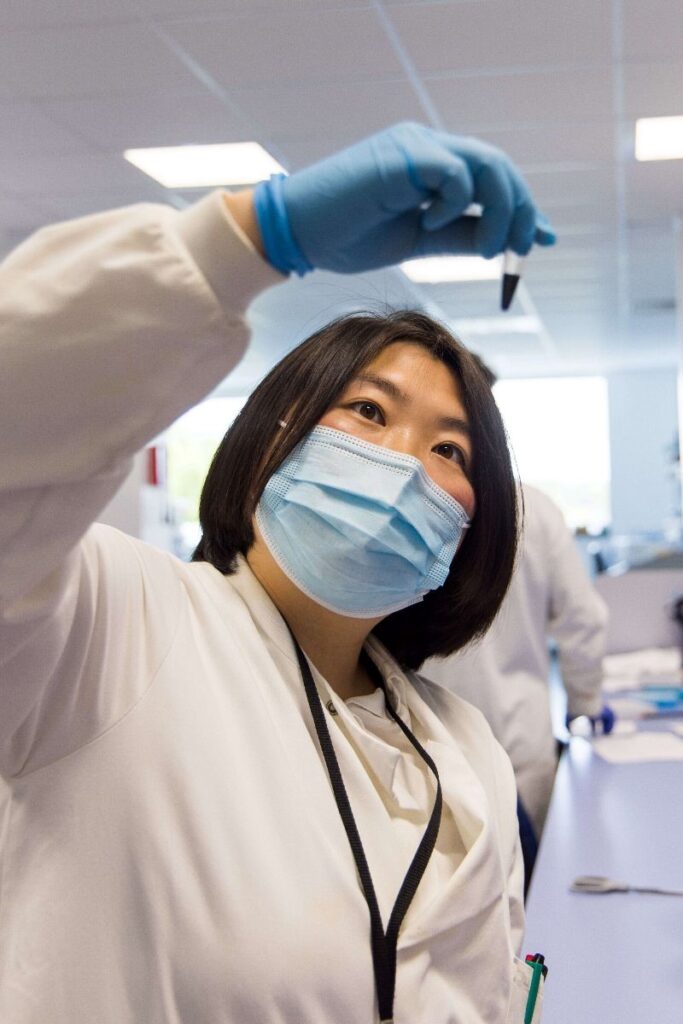
Dr Juri Na, a Research Fellow at our Plymouth Centre, has been investigating what causes meningiomas to become resistant to radiotherapy and has made an important discovery which could help overcome this.
Dr Na found an enzyme called HDAC6 was significantly increased in meningioma cells which had undergone radiotherapy. She found that pre-treating meningioma cells with a chemical called CAY10603 to block the effect of HDAC6 made radiotherapy more effective in lab models and resulted in tumour cell death.
It’s exciting because, although in its very early stages, this research could help us find new ways to improve the effectiveness of radiotherapy in order to improve outcomes for patients diagnosed with high-grade meningioma and those who cannot have surgery to remove their tumour.
It’s much-needed progress for patients like Katie, who had two operations and six weeks of radiotherapy after her meningioma diagnosis in 2022. “This development is really exciting and it’s reassuring to know that there is something out there which could help people like me. When I was in hospital, I met a lady with multiple tumours on her brain who had to endure multiple rounds of radiotherapy. It would be lovely to know this will help people like her in the future,” she said.
Dr Karen Noble, our Director of Research, Policy and Innovation, said: “We are delighted to see this promising new approach by the team at our Plymouth Centre and particularly pleased to share this news with our supporters on Research Appreciation Day. We need to keep funding this early-stage research because this is the only way we will find new and improved treatments. We hope this impressive work will lead to clinical trials for meningioma patients.”
Early-stage research is key in the fight against brain tumours and your support enables the teams across our network of Research Centres to make these important breakthroughs which will get us closer to a cure. Thank you for helping make a difference.
Did you know?
Brain tumours represent 1.4% of all cancers diagnosed, yet 3% of all cancer deaths