
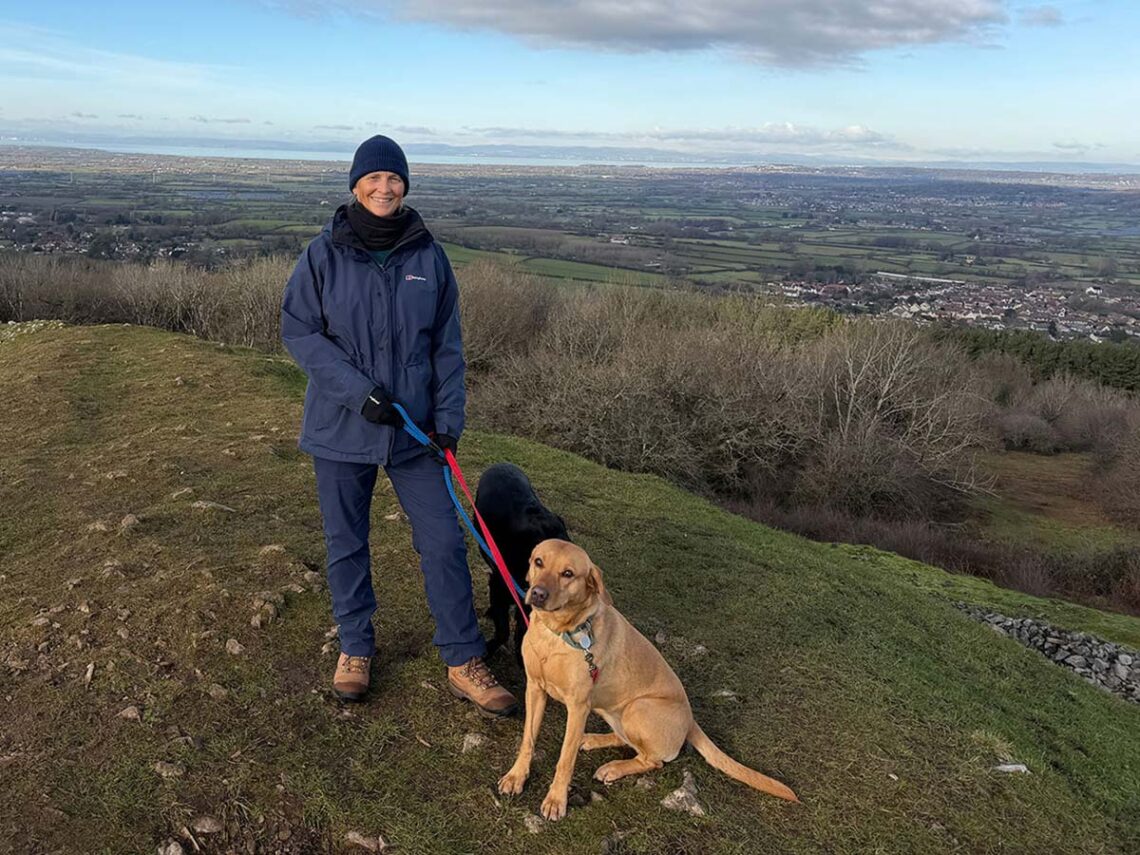
My Story by Susie King
When Something Didn’t Feel Right …
In the summer of 2023, I began experiencing unusual shimmering headaches, which I initially attributed to the pressures of a busy work and home life. However, in early September, I suddenly lost consciousness one morning in my kitchen, completely without warning.
At first, the focus was on my heart, as a GP suspected a possible murmur. After further cardiac testing, no significant issues were found. Fortunately, my consultant took note of my headaches and referred me to a neurologist.
The Moment Everything Changed
Receiving the results of my brain MRI was a surreal experience. Hearing the words “you have a brain tumour” felt as though I were observing the moment from outside my own body, like a scene in a film. I remember my arms shaking uncontrollably, but the reality didn’t fully hit me until I left the room and could finally process what I had been told. At a follow-up appointment, I learned that the tumour was inoperable due to its location in the brainstem – an area responsible for essential life functions.
Feeling Uncertainty
What followed was a long and challenging period of uncertainty. Determining the exact type of tumour proved difficult. Over the next six months, additional MRIs showed that it was slow-growing, but they also revealed something unexpected – it had likely been present for around 12 years. Back in 2013, I had suffered frequent migraines and underwent an MRI at my local hospital, which was reported as clear. However, when those images were later reviewed by my neurologist, it became evident that the tumour was already there, albeit much smaller.
Over the next year and a half, under my oncologist Matt Williams, I underwent several liquid biopsies – two blood tests and one CSF sample – but all were inconclusive due to insufficient circulating tumour DNA.
An Impossible Decision
Eventually, routine scans began to show that the tumour was growing, and I started experiencing new symptoms. At that point, I faced a difficult decision: proceed with treatment without a confirmed diagnosis or undergo a high-risk biopsy. Given the tumour’s location, the procedure carried significant risks, including the possibility of permanent neurological damage. However, after meeting with my surgeon Kevin O’Neill several times, I felt reassured by his expertise and care. Although I understood that the biopsy might not provide answers, I decided to go ahead.
In September 2025, I underwent the biopsy. Thankfully, it was successful, providing crucial information about the tumour’s type, grade, and mutation. Aside from a few days of severe vertigo, I recovered quickly and, most importantly, without any lasting physical effects.
Moving Forward
I was ultimately diagnosed with a grade 3 astrocytoma – more aggressive than my doctors had initially expected.
I have now completed six and a half weeks of radiotherapy, and I am preparing to begin a year-long course of chemotherapy. As I move into this next phase of treatment, I felt a strong desire to create something positive from such a difficult experience – to give something back, not only to this particular charity, but also to the many thousands of people who will face a similar diagnosis in the future.
I am raising funds for the Brain Tumour Research Campaign (BTRC), founded by Kevin O’Neill and Wendy Fulcher. Together, we are working to develop the world’s first dedicated Adult Brainstem and Deep Brain Lesion Programme – an initiative focused on transforming some of the most complex and challenging tumours into treatable conditions.
Why Funding Research Is Needed
This programme aims to address the significant lack of research and treatment options for brainstem and deep brain tumours, which are often difficult to access and diagnose safely. By bringing together surgical expertise, molecular research, advanced imaging, and clinical data, the goal is to create a comprehensive, integrated approach that will improve diagnosis, treatment, and outcomes for patients worldwide.
Climbing Everest, One Step at a Time
To support this work and maintain my focus throughout the year ahead, I have set myself a personal challenge.
Over the next 12 months, alongside my chemotherapy treatment, I will attempt a virtual climb of Mount Everest.
This means climbing the equivalent height of Everest – one floor at a time. In total, that’s nearly 3,000 floors of stairs. I will be tracking my progress using my Apple Watch, counting floors climbed daily, as well as recording elevation gained during walks in the Mendip Hills and sessions on the stepper at my local gym. Each floor represents approximately three metres of vertical ascent.
It is a challenge that would be demanding under any circumstances – but one that feels especially meaningful now.
I’d love your support. If you can, please donate or share my JustGiving page, it would mean a lot and really help make a difference. Thank you!